



20
Exceptional Australian home nestled on a reserve
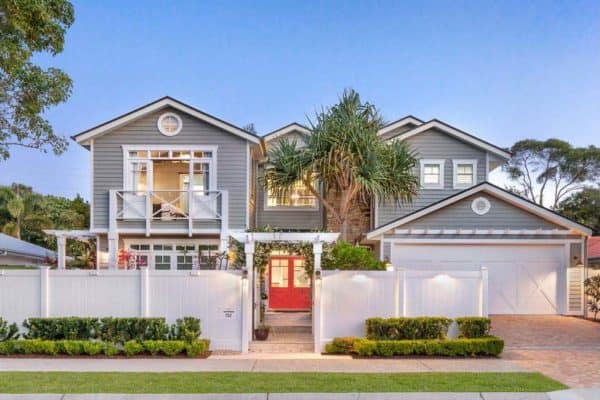
This amazing home nestled in a tree-lined cul-de-sac in Northcote, a suburb of Melbourne, Australia offers a private entry to Rubie Thompson Reserve. Designed by award-winning architect Robert Simeoni the residence presents an artful blend of contemporary style. As welcoming as it is intimate and sophisticated, architectural voids invite the environs in, over two floodlit levels, to a series of expansive living zones for a subtle, relaxed ambiance.
Seamless glass walls delineate a superb entry through exceptionally proportioned formal and informal living areas with open fire and custom in-built cabinetry. A palette of natural surfaces and materials echoes its Park setting. There are four spacious bedrooms, a master chef’s kitchen and an open plan living/meals area overlooking a large rear yard. A separate formal living area with an open fire place, large upstairs landing/study nook with tranquil views of parklands. Via
18
Melbourne townhouse with impressive modern arrangements
Park Street Residence was designed by the studio of Hecker Guthrie in Melbourne, Australia. What began as an exercise in loose furniture quickly grew into a kitchen, bathroom and joinery overhaul as the potential of this inner-city townhouse became increasingly realized by both the owners and designers. Definition and texture were key elements introduced into the dwelling, clearly identifying gathering spaces. The kitchen and fireplace elements create focal points, while a coveted selection of loose furniture layered with objects and art has turned this house into a home.
“The house was originally planned to be two townhouses side by side, and in a struggling real estate market our dot.com entrepreneur and his wife swooped in and had the two apartments converted to one mid-way through the build. As with many developments, they are designed to sell, and rarely do they reflect the personalities of their future inhabitants.”
The kitchen was under scaled and had no connection to the surrounding living areas. Conversely, the living spaces were vast and had no real sense of purpose.
The kitchen increased in both scale and serviceability and the materials chosen had a whole lot more grunt then what was there previously.
A single rug connected the spaces followed by a Cassina shelf that divided them– allowing the client to showcase a new selection of objects.
Inserting a wall of joinery on the south wall which accommodated a fireplace, bar unit and study nook – this connected the two living spaces and gave a real sense of rigor to the space.
The powder room went from being an eyesore to a space the client was no longer embarrassed to allow guests to visit.
12
Pavilion house in Australia open to a lush landscape
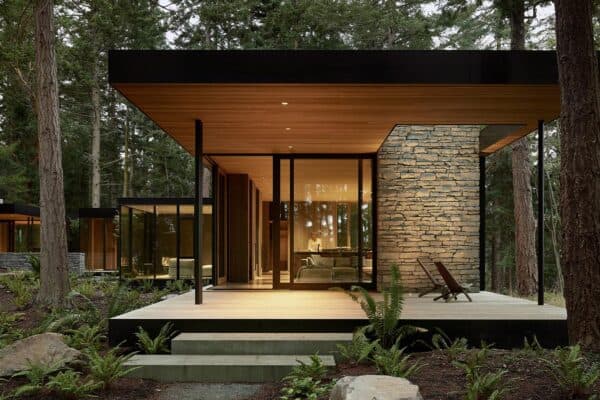
Angophora House has been designed by architect Richard Leplastrier, sited on the Eastern tip of the extended grove of Angophoras that makes up the iconic Angophora Reserve in Avalon, New South Wales, Australia. The house is a pavilion-plan, where the design has been informed by the location. Comprising six pavilions, they seemingly waltz in harmony with the existing Angophoras, creating a courtyard feel. The layout of the buildings has a practicality that slowly becomes apparent; the separation of the master bedroom; further bedrooms rising through the tree canopy; adjoining living and dining areas; and a multitude of uses for the guest pavilion.
Sheltered from the harsh southerlies in winter, in summer a cool north-easterly breeze ventilates this little valley with help from a canopy of Angophora leaves and remnant rainforest Lily Pilly. This creates a micro-climate that is about three degrees cooler than the temperature on the street.
This fabulous house is listed for sale from here.
To enter the house one is drawn between the guest and main bedroom pavilion into the internal courtyard, down three steps to the front door, detailed with blue and yellow glass to either side.
The pavilions facing one another create a space that is one of reflection and perhaps even best described as ‘internalized’. There is an order and a hierarchy to the design. The scales of the pavilions are quite different. One is just 1.3 x 3.2m, to the main living pavilion, comprising a three-storey tower that draws one up into the tree canopy.
Even though it is a highly designed space, the house feels relaxed and natural at every turn. The honesty of the material palette creates an easy relationship with the environment.
A series of floating decks with wooden steps join the main pavilions, creating a walkway between the spaces. One engages with the environment. This house is as far away from being an air-conditioned executive box as one can get.
The simplicity of palette in materials and meticulous construction creates a soothing ‘easy on the eye’ calmness. The architect has complimented the owner builder during the final construction phase saying that this quietness is very hard to achieve.
Integral to this is the detailing. And there are numerous details to speak of; the three-storey tower pavilion with external spiral staircase encapsulated in chrysalis-like form within the structure of a remnant rainforest Lilly Pilly.
The guest pavilion’s 6m x 4m floor, comprised of five slabs of Jarrah, the outside wain edge being retained showing the history of scrub fires that harassed the tree in life but now locked into a floor by stainless steel chains and mirroring our majestic Eastern Seaboard coastline.
There are many more details that surprise and delight; from the beautiful handmade copper sinks and light fittings down to the smallest of details such as the handmade whipped leather front door handle covers.
The property is perhaps best summed up by the current owners who say, ‘We have had great pleasure in living here and being a custodian of this iconic treasure. Unfortunately, we are passing the baton to someone else who I am sure will love and cherish this house. Numerous architectural students from all over Australia and from Gifu wood working university in Japan have seen this house and it has given them much pleasure, as I am sure it will for others into the future.’
7
Astounding warehouse conversion with garden oasis
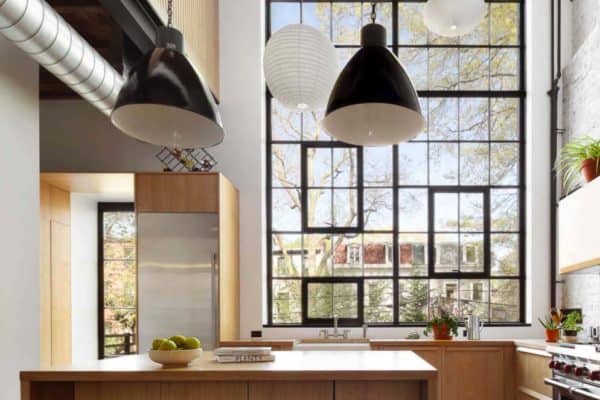
This original South Fitzroy, Victoria, Australia artist’s warehouse conversion has been the longtime home and studio to a renowned painter. This rare stand alone Victorian warehouse is the perfect place to live and work on the city fringe. The property has retained not just original soaring ceiling heights and Oregon beams but the true spirit of a creative loft. Massive studio gallery, two bedrooms plus study/office, library, kitchen living space with deck, jungle oasis garden, two bathrooms and in-floor heating make the space a comfortable home. This rare find is a genuine warehouse which has escaped the developers. This unique home is listed for sale from here.
4
Surry Hills warehouse converted to incredible dwelling
This exclusive 1850s carriage house is one of Surry Hills, a suburb of Sydney, Australia’s finest single dwelling warehouses, which has been designed by Hare & Klein Interior Design. This unique design encompasses 8,395 square feet (780 square meters) of living space spread out across three levels, embracing a convenient cosmopolitan lifestyle.
The home features an incredible open plan with a Blackbutt featured kitchen, casual and formal living area, outdoor entertaining deck, ground floor studio/gallery, four bedrooms including a master bedroom with deluxe en-suite bathroom and spacious guest wing with en-suite bathroom, four car garage with two tandem internal access and unique features such as beautiful fireplace, chic lighting and exposed timber beamed ceilings.
The home was also a shortlisted entry in the 2011 Australian Interior Design Awards.
Photos: Jenni Hare
1
A modern conversion of an historic warehouse
An historic warehouse has been converted into an incredible home on Northumberland Street in Collingwood, Victoria, Australia. Working on the interior of the project was Australian design studio Herniman + Interiors. The project required sensitive design, mixing the charm of the existing brick structure, steel staircase and historic balconies with the modern requirements of a travelling family. The aesthetic is both comfortable and slick, using a palette of monochromatic finishes mixed with warm bamboo flooring and splashes of “Asia”. Co-coordinating with a client that was mostly out of the country required heightened attention to detail and good communication.
Photos: Courtesy of Herniman + Interiors
20
Fascinating Australian property showcasing waterfront views
The Promenade Residence is a stunning contemporary waterfront home in Australia that welcomes its owners with a series of structural elements that are hidden behind the front entrance. Guiding their steps along the dark-colored first floor towards the main entrance and further back towards the backside garden, sculptural elements hint towards the modern features showcased inside. The home was designed by Bayden Goddard Design Architects as a stylish suite of rooms culminating with a swimming pool overlooking the nearby harbor.
The modern waterfront home was designed to focus the attention on water views while creating a glamorous interior arrangement suited for a modern urban lifestyle. Social spaces on the ground floor open towards the partly glazed backside, inviting patio and elevated swimming pool. Upstairs, private spaces were carefully constructed to capture views of the street and the water, with large sliding doors seamlessly connecting the main bedroom to a long terrace. Details shape a unique interior design, focusing on a natural color palette accentuated by bold patterns.
16
Ultimate beach home with gorgeous ocean views
This bright and airy character filled home captures the true essence of its coastal lifestyle in New South Wales, Australia. Nestled on a spacious property with beautiful gardens, this private paradise is close to the cosmopolitan Newport village, famous for its diverse blend of shopping, cafes and restaurants. The front of the property features a wonderfully protected sandstone courtyard useable for all year round entertaining. The refreshing beachy all white color scheme, rough sawn timber walls, open plan living and sun-drenched decking, combine to create the ‘ultimate beach home’ with gorgeous ocean views. The stylish design includes many individual and distinctive characteristics and high attention to detail.
There are three bedrooms on the lower level with one of the bedrooms open to an area fabulous as a kid’s play room or TV room. The king size master bedroom on the upper level with a deluxe en-suite opens to a private and covered deck also with built-in day bed taking in the wonderful ocean views. Storage is aplenty with a couple of storage rooms useable for surfboard storage, or workshop and a large area underneath the house which can be used as additional storage or a home office or artist studio with a deck area also capturing the ocean view. Via
Sun drenched decking with built-in day bed creates a relaxed area to sit back admire the ocean view and read a paper or a book.
Character filled kitchen with an entertainer’s stainless steel gas oven and wooden island bench top and large pantry and original character sink. Includes built in under bench industrial fridge.
Open plan living incorporates the lounge, dining and kitchen and flows out to a sunny deck. The lounge area has a classic open wood fireplace surrounded by enough built-in shelving to hold a library of books.
24
Beach dwelling melds into the coastal landscape
The House at Big Hill is situated near Victoria, Australia’s Great Ocean Road, characterized by a restrained material palette and singular form by Kerstin Thompson Architects. The triangular plan, semi-recessed into the sloping site, is orientated to take advantage of the 180 degree views towards the townships of Lorne and Airey’s Inlet and of Bass Strait through a filter of mature eucalyptus. Responding to the client’s preference for a solid building a natural grey concrete block was selected for the walls, both inside and out. In combination with a black ceiling and dark roof the 2,583 square foot (240 square meters) house is effectively camouflaged within its bush landscape.
The interior has an intimate quality achieved through the careful modulation of natural light and shadow and the use of timber accents which offset the concrete floors and blockwork walls. Views are captured by picture frame windows that become spaces to occupy through deep reveals and window seats. A contrast to the lightweight beach house this dwelling instead provides a solid retreat from which to contemplate the extremes of this beautiful west coast landscape.
Photos: Trevor Mein
21
A serene oasis in Melbourne: One Hot Yoga
We just received photos of this incredible brand new yoga studio called “One Hot Yoga.” The first hot yoga studio of its kind, maintaining 37 degrees with an efficient natural heating and fresh air ventilation system. The studio is a fresh, contemporary, luxe space situated in River Street, South Yarra, Victoria, Australia. Robert Mills Architects has a reputation for world class luxury residential design, such as this recent post Sorrento House, and his skills have now been applied to create a serene oasis in a densely urban corner of Melbourne’s inner city.
Robert facilitates effortlessly comfortable spaces – design that doesn’t shout at you or demands your attention, but just effects peace, ease and uplifts the spirit.
The philosophy is kept simple and practical in this studio, avoiding woolliness and mysticism. This is directly reflected in the design of each individual space from the paired back change rooms with recycled oak benches, to the polished concrete floor of the practice studio on the first floor.
“The studio employs a natural radiant heating and fresh air system –it feels like a balmy summer day with a fresh breeze, rather than smelling like old gym socks and suffocating forced air. The hydronic system is the lowest energy use system in Melbourne, so it is better for the environment. Ultimately Robert has achieved a truly beautiful space where people can experience the wisdom and bliss of yoga.”
// ]]>
Photos: Courtesy of Robert Mills Architects