










18
Stunning Lake LBJ Retreat by Dick Clark Architecture
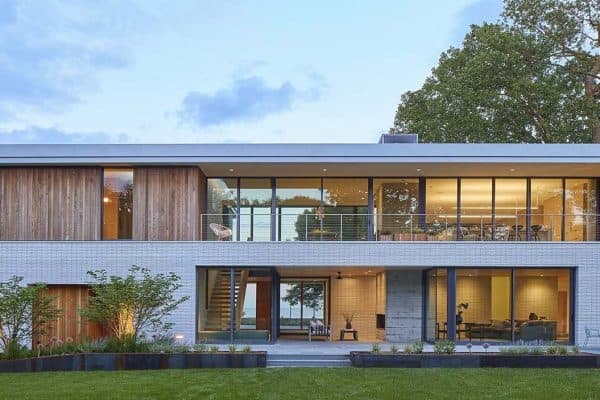
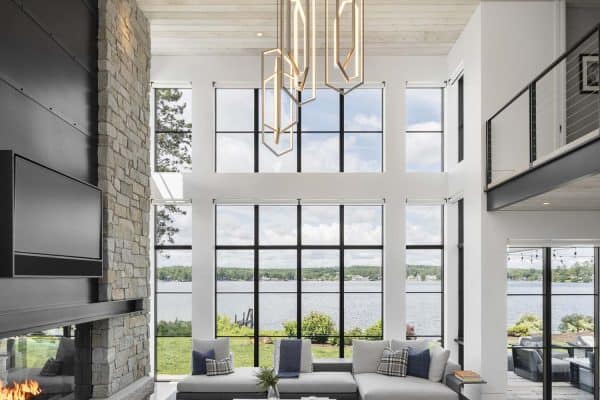
Lake LBJ Retreat has been designed by Dick Clark Architecture, situated near Marble Falls, just outside of Austin, Texas. The retreat is sited on a peninsula that served as a private fish camp since during the second half of the 20th century. After spending some time in an existing house on the land the clients decided to create a new space that supported their evolving lifestyle. Wind patterns and the existing tree canopy were crucial influences on the project’s design development. Exterior circulation paths and separate living spaces encourage a connection with the outdoors. Project materials include cast in place concrete, ipe siding and Rheinzink metal siding.
Photos: Courtesy of Dick Clark Architecture
12
Lake Michigan retreat blends modern and rustic details
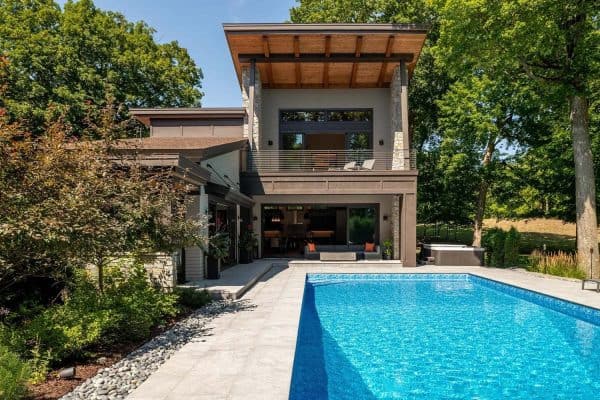
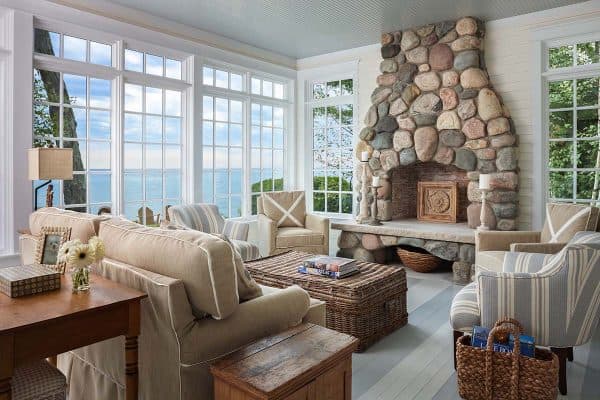
Lake Michigan Residence is a multi-generational destination retreat designed by Deep River Partners, nestled into the dunes on the shoreline of Lake Michigan in Milwaukee, Wisconsin. The modern rustic styling boasts panoramic views through the expansive rhythm of windows. The home has been divided into public and private zones adjacent to the axial three story atrium that traverses the interior. A calming water feature flows from a locally obtained boulder at the foyer through the Atrium, drawing one to the beach and lake beyond.
Amenities for all ages are plentiful in this accessible vacation home. Multiple master suites, family living suites, an open main kitchen, and large dining spaces make it ideal for multiple families to gather and relax. The beach changing and spa area are complete with a workout and steam room that support an active lifestyle while a movie theater, game room, and multiple conversation areas provide the ultimate entertainment atmosphere after a day on the beach.
Photos: Joe DeMaio
20
Cabin on a cliff overlooking Coeur D’Alene Lake
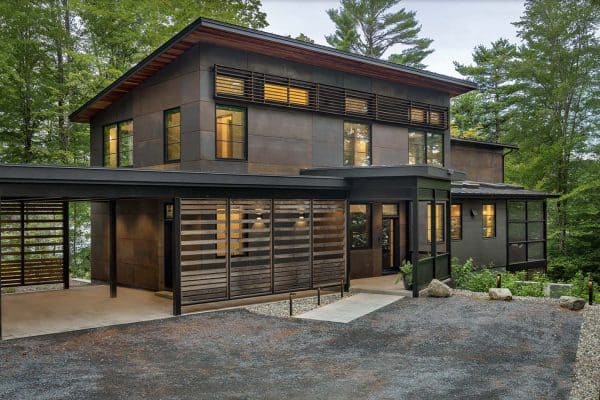
The goal of the project was to create a modern log cabin on Coeur D’Alene Lake in North Idaho. Uptic Studios considered the combined occupancy of two families, providing separate spaces for privacy and common rooms that bring everyone together comfortably under one roof. The resulting five bedroom, four-and-a-half bathroom, 3,000-square-foot vacation home (4 pods, 750 square feet each, plus a 200-square-foot bridge) nestles into the site overlooking the lake. A delicate balance of natural materials and custom amenities fill the interior spaces with stunning views of the lake from almost every angle.
The window also acts as a serving station and bar area, allowing guests on the large ipe wood deck to engage with those in the kitchen.
The daughter and her husband and three kids occupy the bottom floor of one of the pods. It has a kitchenette, washer-dryer, dining nook, bedroom and bunk room.
Wanting to maximize outdoor space, the architects avoided using columns on the deck. Instead a steel beam system was used to support the cantilevered roof and allow windows to extend all the way to the ceiling.
Four pods — two wings with two pods each, one on top of the other — are connected by an interior bridge, creating a dog-bone shape, Collins says. One of the pods is the combined living, dining and kitchen spaces; it opens to an expansive deck. The other pods are the private bedroom areas.
A sliding door lets the owner’s close off their pod from the rest of the house.
A large cantilevered roof protects the house and its cantilevered deck spaces from sun, rain and snow, with a design philosophy that keeps the structure exposed.
Photos: Shaun Cammack
3
Glamorous country retreat with lake views
Architect Paul Lamb designed this Westlake, Texas retreat with the great twentieth-century British architect Edwin Lutyens, in mind. Lutyens was best known for his imaginative adaptations of traditional style, and both Lamb and interior design firm Fern Santini have followed suit here. This limestone residence is cozy in front, but opens to the lake with mullioned floor-to-ceiling windows. Oushak rugs, a subtle palette, and comfortable sofas aren’t so serious when paired with quirky occasional chairs. Glamour is serious, though, in the master suite where luxe is a pleasure to behold.
22
Tudor home with a modern twist on Lake Washington
This whole-house remodel gives us a venerable brick Tudor home a modern twist in Seattle, Washington. The home was designed by Deforest Architects for two book (and dog!) lovers, who had been walking their dogs past a modest Tudor for many years before they purchased it. They asked the architects to give the house a new life built around their love of books, dogs, and simple modern spaces filled with natural light. The residence incorporates bookshelves and cozy seating area throughout the house. Modern details complement traditional elements while steel windows, doors and exposed structure open the interior to light and views. The exterior features a ‘secret garden’, sunroom and terrace that overlook Lake Washington.
Photos: © Benjamin Benschneider
21
Contemporary lake house filled with light and art
DeForest Architects transformed this existing lakeside residence in Seattle, Washington from a house full of heavy stone and beams into a light-filled place for enjoying art, food and family. The clients, Mark and Mattie, are an entrepreneur and artist, mom and dad, this creative couple asked the architects to transform their home on Lake Washington into an elegant, family-friendly house filled with light and art. The staircase design received a Grand Award from Residential Architect and a Citation from the Washington AIA Honor Awards.
Photos: John Granen, Ben Benschneider (stairs)
28
Stunning dwelling with views of Valle de Bravo Lake
Nestled on a steep slope with boundaries irregular in its geometry, MZ House, designed by CHK Arquitectura, is situated in Valle de Bravo Lake in Mexico. Bordered by a brook of clear water and by the lake itself, at one very narrow end there is a bridge that provides the only access to the site; the remaining sides are limited by the vegetation of neighboring constructions and by thick forest.
Though blessed with beautiful views to the lake and to the brook, the site does not offer up these sights at first glance; they can only be seen from different levels of the terrain and through the surrounding forest. It is therefore necessary to locate the different functions of the program in the more or less privileged zones, according to their importance.
The program is designed to provide the best views for the public spaces in a horizontal arrangement, and for the private quarters in a vertical disposition. The plastic expression of these volumes, how they are built, and the circulation among them are the theme through which the project expresses itself.
The cuts and stalls on the terrain are resolved using walls of stone from the area. Other lighter elements are built from poured concrete or brick to divide spaces, and glass paneling is placed where the views so require. The flooring is a lightened concrete system over steel and wooden beams.
The relation of the different spaces to the sometimes very massive terrain, as well as the views they provide (seeking transparency most of the time), give the 8,295 square foot (780 square meters) project a complex interplay of weight and levity.
Photos: Yoshihiro Koitani
8
Eagle Harbor Cabin on Lake Superior
The Eagle Harbor Cabin is located on a wooded waterfront property on Lake Superior, at the northerly edge of Michigan’s Upper Peninsula, about 300 miles northeast of Minneapolis. Designed by Seattle-based studio, Finne Architects, the wooded 3-acre site features the rocky shoreline of Lake Superior, a lake that sometimes behaves like the ocean. Here is a project description from the architects, “the 2,000 square foot cabin cantilevers out toward the water, with a 40-foot long glass wall facing the spectacular beauty of the lake. The cabin is composed of two simple volumes: a large open living/dining/kitchen space with an open timber ceiling structure and a 2-story “bedroom tower,” with the kids’ bedroom on the ground floor and the parents’ bedroom stacked above.
The interior spaces are wood paneled, with exposed framing in the ceiling. The cabinets use PLYBOO, a FSC-certified bamboo product, with mahogany end panels. The use of mahogany is repeated in the custom mahogany/steel curvilinear dining table and in the custom mahogany coffee table. The cabin has a simple, elemental quality that is enhanced by custom touches such as the curvilinear maple entry screen and the custom furniture pieces. The cabin utilizes native Michigan hardwoods such as maple and birch. The exterior of the cabin is clad in corrugated metal siding, offset by the tall fireplace mass of Montana ledgestone at the east end.
The house has a number of sustainable or “green” building features, including 2×8 construction (40% greater insulation value); generous glass areas to provide natural lighting and ventilation; large overhangs for sun and snow protection; and metal siding for maximum durability. Sustainable interior finish materials include bamboo/plywood cabinets, linoleum floors, locally-grown maple flooring and birch paneling, and low-VOC paints.”
2
Majestic wooden retreat on Whitefish Lake
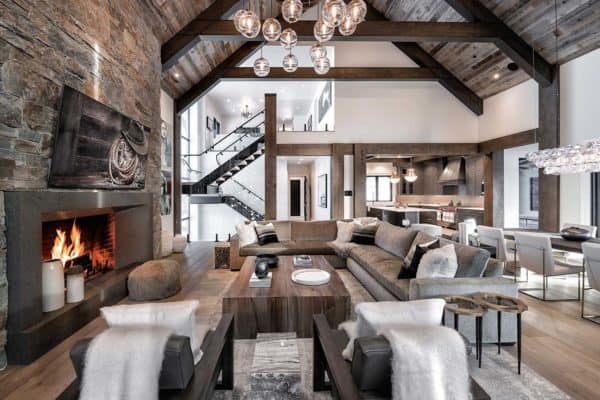
This stunning timber home has been built by High Country Builders, situated along Whitefish Lake, northwest Montana. Surrounded by beautiful and relaxing wilderness, a pristine blue lake and snow-capped peaks, this 4,800 square foot home with 270 degree panoramic views took only seven months to build. All materials were pre-selected and there was no client to detract the builders from their time schedule. Named for the serene area where the home is located, Lazy Bay uses a construction method of combing conventional stick framing with the majesty of timber framing.
The most impressive feature in this home is the great room’s timber windows, featuring huge expanses of fixed clear glass that has been tucked between naturally tapered cedar posts, gives the illusion of being outdoors. There is no visible framework, so it gives the illusion that there are no windows. The timber windows fuse the outdoors into the interior by their sheer size alone. Interior design firm, Hunter & Co., in Whitefish, Montana made all the interior selections and coordinated all structural decor inside Lazy Bay, including the hardwood and tile floors, light fixtures, cabinets, stonework and furniture. The combination of slate and tumbled glass accents give the house a contemporary edge, even though it maintains rustic feel.
Lazy Bay uses both radiant heating beneath floors, as well as forced-air heat. With all the glass throughout the home, warm air needs to be blown against it to you will not feel a chill the home. When a constant temperature has been reached, the furnace will not have to work as hard to maintain it. The logs and stonework will help to warm the home by absorbing the sun’s heat during the day, creating energy efficiency and making the home look beautiful. Copious amounts of glass tends to create a contemporary feel, the addition of a variety of stone makes the timber structure feel grounded and homey. Via
Lazy Bay was built as a vacation home for someone looking for an escape from the ordinary. What do you think, did they succeed at this?
An exterior view of the home shows the upper-level great room’s massive timber windows that overlook the adjacent lake. Stone and wood work together to help further the illusion of the seamless transition from the home’s interior to its surrounding nature.
The wood floors — western larch and fir — were circle sawn and left rough, stained black, sanded, and then stained brown.
// ]]>
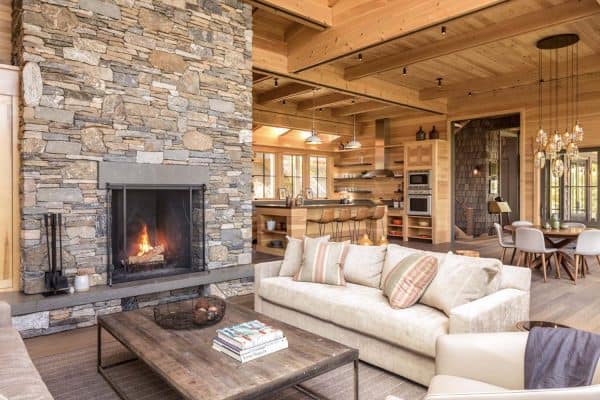
A parallel-cord truss visually lowers the ceiling height while supporting the weight of the roof. The huge stone above the firebox is so heavy, it took a crane to hoist it into place. In lieu of a traditional mantel, it’s the focal point of the hearth.
The alder wood cabinets were distressed and had a crackle finish applied.
The bathrooms’ tile floors are a combination of marble and slate in varying shades of gray.
Photos: Heidi Long
9
Cliffside Lake House overlooking Lake Tahoe
The Cliff House project, referred to as “The Lake House” by its present owners, has been designed by San Francisco-based studio Mark Dziewulski Architect. The dramatically steep site, 150 feet above the edge of Lake Tahoe, overlooks sweeping panoramic views of the entire lake and mountains beyond on a half-acre lot in Incline Village, Crystal Bay, Nevada. Five cantilevered levels, following the slope, express the different uses and their varying forms reflect the optimum orientation and requirements of the individual spaces within.
Taking four years to complete, the 8,694 square foot house is a series of overlapping curved roofs that are fanned out towards the lake, creating a man-made rolling landscape that underlines the view of the lake and mountains beyond. The contemporary home is comprised of steel, concrete and glass featuring four bedrooms, four bathrooms, a glass elevator, a six level glass stairwell and of course a private pier.
The house is largely concealed from the road and its fragmented form, cut deep into the steep slope, reflects the geometry of the rocky hillside, allowing it to blend in with its context. The main spaces overlook the lake through an expanse of glass, which is shaded with large overhangs and is angled forwards to reduce reflections. A vertical stair tower provides a strong anchoring element for the whole composition and acts as a hinge point, organizing the main spaces.
Visit the website of Mark Dziewulski Architect here.
Photos: SkitheFuture


Sumptuous Swedish loft with fascinating decor