



26
36 Gorgeous shabby chic interior spaces
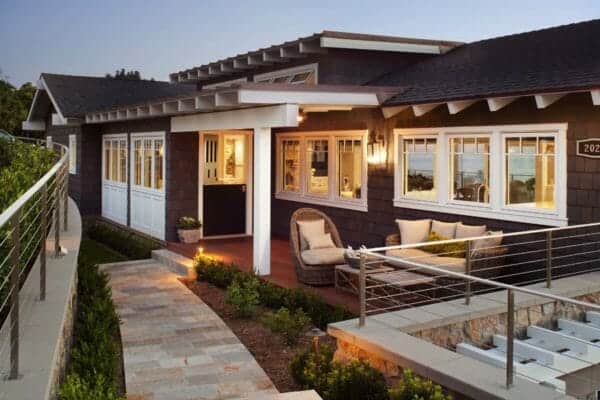
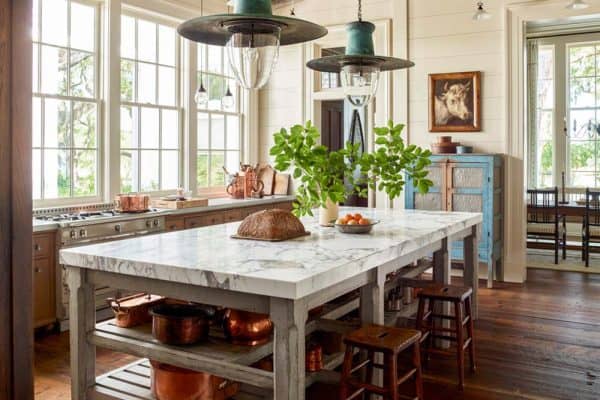
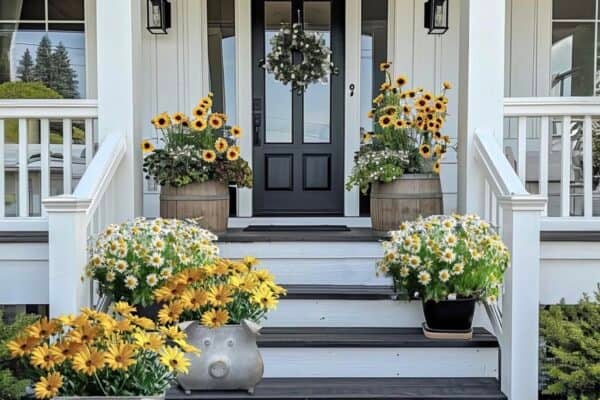
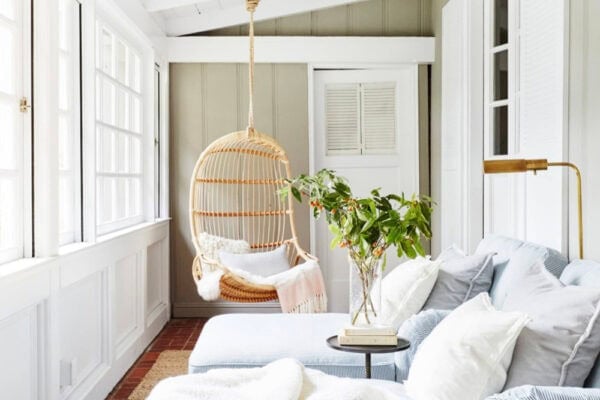
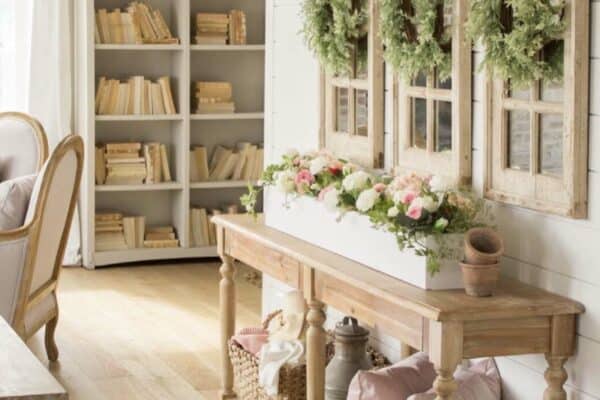
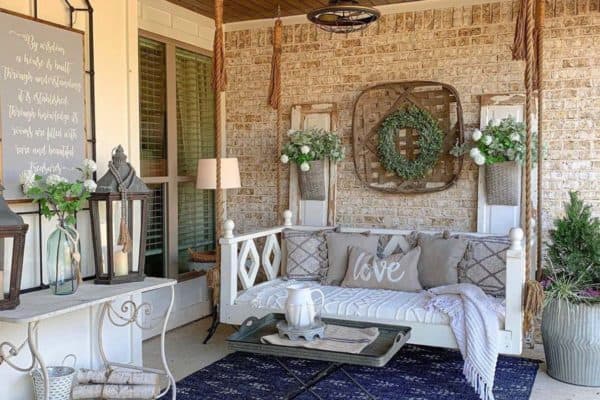
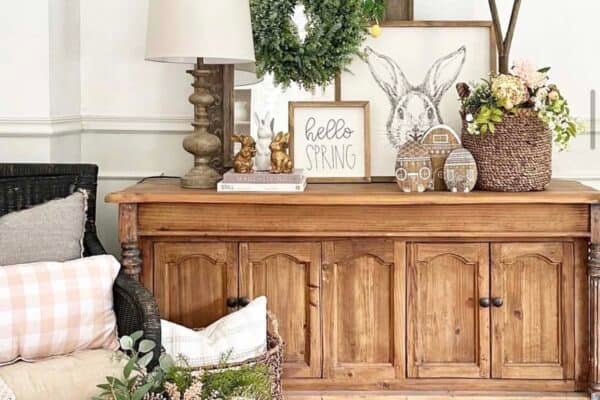
Shabby Chic style is a beautiful look and can be incorporated into any home for a fun and whimsy design aesthetic. The basic principle of shabby chic style is a look that is unstructured and lacking in formal rules; a timeless aesthetic which can add an effortless elegance to your home. With salvaged furnishings, handicrafts and vintage textiles that are available not only in flea markets, but also in retail shops (typically as reproductions), you don’t have to search high and low for that perfect piece. You may even have a diamond in the rough right under your nose, a derelict piece of furniture just waiting to be whitewashed and restored. That’s the beauty of shabby chic style, it’s budget-friendly and easy to acquire. Here are some suggestions of ways you can achieve the look.
Select seating you can sink into such as bean bag chairs, use a well-worn table, antique frames for art (ornate frames and framed mirrors), give a once formal seating a shabby chic makeover, light up a room with a chandelier, set the table with linen napkins, create an airy, beachy ambiance in the bedroom, infuse shabby chic style into your outdoor spaces, make use of well-worn storage options (they don’t need to be confined to just the bedroom, add them to an entrance hall, feminine home office or dining room as elegant storage options), use fine china to add whimsical sophistication when entertaining such as serving tea in vintage tea cups.
Photos: Undicilandia
23
Dream home in Corona del Mar with ocean views
With a love for gardening and a desire to capitalize on the commanding views, the clients came to Laidlaw Schultz Architects with a request to create a home in the beautiful community of Cameo Highlands in Corona del Mar, California where the line between indoors and out is blurred. The design solution centers on the creation of two distinctive outdoor spaces. The first is an entry courtyard with an emphasis on activity space – some shielded while others open to the sky; the second is a series of lower terraces on the downhill side of the lot, with views towards the Pacific Ocean. A quiet veranda overlooks the terraces, which are dedicated to gardening.
The project’s strict budget yielded a creative solution of exterior materials developed around a simple screening wall composed of horizontal and vertical lpe planks, and smooth exterior plaster with a standing-seam roof capping the composition.
Internally, where possible, walls were removed to capitalize on views; and a composition of textured elements, both smooth and rough, are juxtaposed to add a richness often lacking in modern homes.
21
Eco-modern beach house on Cape Cod
This ultra stunning modern beach house has been designed by ZeroEnergy Design to be an environmentally sensible home in beautiful Cape Cod, Massachusetts. The clients are a professional couple, both in different medical fields with a large family including grown children and grandchildren, came to the architects with some unusual space requirements, a narrow lot on an environmentally sensitive site, and a magnificent west-facing view.
They normally reside in downtown Boston, but plan to spend their summers and weekends on the Cape. While their Boston residence accommodates some of their children, their new 6,200 square foot, seven bedroom, eight bathroom beach home will be the only place that will accommodate all seven of them, including their significant others and the grandchildren, thus dictating the need for an extensive number of bedrooms. The entire family will gather over the summer and on holidays, while the couple will use the home by themselves during weekends throughout the year.
Planning for the extreme variation in occupancy was an issue the designers dealt with from the start. The home is split into a ˜Living Bar’ and a ˜Sleeping Bar.’ The Sleeping Bar is the expansion module with numerous bedrooms & bathrooms to accommodate the entire family. The Living Bar includes the living and dining areas, as well as a secondary master bedroom – all that the couple needs when the children are away. This programmatic zoning allows the Sleeping Bar to be shut down during the majority of the year to decrease energy use.
The site has a spectacular west-facing view of the water and sunset. The area of west-facing orientation of the glazing used to capture this view certainly isn’t ideal for energy performance. The narrow lot size, combined with the client’s square footage requirements and the obvious desire to be able to take in the view from the primary living space made the un-ideal orientation of the glazing unavoidable. The rest of the building envelope certainly offsets the luxury view.
The exterior finishes will allow the home to turn a traditional Cape Cod grey and blend into the dunes. The site is vegetated with indigenous plants that prevent erosion and won’t require irrigation.
Choices were also made to promote healthy indoor air quality. Flooring was limited to slate, bamboo, and polished concrete, while omitting any carpeting that might capture dust, mites, mold, or moisture. The rapidly renewable bamboo flooring is bound with nontoxic glues. The insulation in interior walls and floor, used for sound insulation and to improve the performance of the radiant heating system, is formaldehyde-free. An air exchange and energy recovery system will provide clean fresh air throughout the year.
Silvia and Silvia of Osterville built the home with double stud framing which allows a continuous layer of foam insulation (uninterrupted by studs). The geothermal system, coupled with a radiant heating system, will supply all of the heating and cooling for the year. Aside from energy efficient appliances and water heaters, all of the spaces are well illuminated using energy efficient fixtures. The client also decided to minimize the home’s reliance of fossil fuels. Propane is used only for cooking. There is no natural gas.
The roof sports a large solar electric array to offset energy usage through the use of net metering. A battery back-up and energy management system will store electricity from the solar array to ensure the basic functions of the home through blackouts without the use of a gas-powered generator. The combination the energy efficient building envelope and systems with the solar array will allow the home to produce nearly as much energy as it uses over the course of a year!
Photos: Eric Roth
11
Modern home integrated into striking natural surroundings
Integrated within the striking natural surroundings, Espinoza House is a single family home that derives its characteristics from the landscape around it, integrating, stone, wood and glass and opening up to the bay. Designed by Chilean architecture practice WMR the 1,506 square foot (140 square meters) home is nestled on the mountains surrounding Matanzas beach, on the Chilean central coast.
The architects sought to integrate the building within its striking surrounding landscape, deriving its characteristics from the environment in which it is inserted. The house is dug into the hill in such a way that it allows for a patio invaded by the morning light, while offering protection from the wind and a view of the sea.
Next to the patio, the architects have inserted the kitchen, dining and living spaces in a lower level, all built out of stone, sharing the materiality of the mountains. The rest of the house’s structure consists of a combination of Oregon pine wood and steel beams, and opens up with large windows that overlook the beach. Here, a living space, which is — conceived as a yoga room — is articulated with two bedrooms.
Photos: Sergio Pirrone
11
Fabulous nature-inspired Tree House on Kiawah Island
The owners of this stunning modern Tree House on Kiawah Island, South Carolina travel extensively and appreciate the great outdoors. Designed by Anderson Studio, global travels have helped to shape the clients desire for a home that embraces nature. The bridge connecting the sleeping and living structures allows cool ocean breezes to pass from the marsh to the front yard; decks and stairs to pool and terrace visually connect inside and out. Most walls from the street are solid, providing privacy, yet they open to rooms of glass, timber and soaring ceilings with views of Bass and Cinder Creeks and Folly Island.
Photos: Holger Hobenaus
10
Spectacular cliffside cabin off the Chilean coast
Tres Hermanos Cabin was designed by Chilean architecture studio WMR, a low-cost residence located on a spectacular cliff in Matanzas, off the Chilean central coast, which seeks to reflect the lifestyle of its young surfer inhabitants. In the same spirit of the architect’s project for Puccio House, WMR have worked with a striking location, and sought to make a minimal, rational intervention that wouldn’t destroy the slope.
Expertly using wood and glass, the studio designed a 3 x 6 meter two-storey volume with open, flexible spaces that intertwine the exterior and interior. With a total of 344 square feet (32 square meters) of living space, the ground floor features a living area, alongside a dining area and a kitchen. On the first floor, two sliding doors are the only elements defining the space, which contains a bathroom, bedroom and hall.
Photos: Sergio Pirrone
10
Bridge House nestled in a forested landscape
Nestled in a beautiful forested landscape with a creek running below the home in Cashiers, North Carolina, the Knob Creek Residence was designed by Platt Architecture and built by Schmitt Building Contractors. Designed with traditional style interiors, the rustic home features exposed ceiling trusses, high ceilings, wood planked flooring, exquisite light fixtures and many other intricate details. A stunning spiral staircase leads one from the bottom level to the top level on one section of the house. The house is raised up from its foundation, creating a bridge over the rushing creek, where the living spaces have striking views of the surrounding landscape.
Photos: Kevin Meechan
8
Modern Hillside Home in Seattle: Crane Residence
Crane Residence is a modern single family home designed by Spore Architecture in a suburban area of Seattle, Washington. Due to zoning restrictions and the odd shape of this 5,500 square foot lot, the architects had to go up, not out. This ended up working well, since the clients had their mind set on just that, a ‘tower’ house with a small footprint. Built on a fairly steep slope, the 2,250 square foot house pushes the private areas to the back – into the hillside, opening up a double-height living space toward the view with an all glass face. Looking into the living room and down to the kitchen is a loft that is flanked by the 3-story glass slot. Perched 4 stories above the ground and accessed by an aluminum grate foot-bridge, the master bedroom has a very private and exclusive feel. Also, with an entire wall of windows that reach to the floor, the master bedroom has unobstructed views of the territory below.
6
A rural Connecticut getaway: The Depot Home
This rural Connecticut getaway is owned and designed by Lisa Gray and Alan Organschi of Gray Organschi Architecture. The Shepaug River Valley Railroad, which ran along the Bantam River in the late 19th century, stopped at this location, once the site of a tiny local train depot. The architect saved and reinforced the existing 19th century rubble foundation, using it as the base for this new house. Two simple gable structures, oriented perpendicularly to each other, create space for a large open plan between them and refer, through their forms, to neighboring barns and to the region’s agricultural heritage. The house interior is lined with bleached pine; kitchen, dining, living and family rooms overlap each other and create a rich series of spatial experiences that accommodate relaxed weekend living. The living spaces open onto a lap pool which is edged in stone-lined gabion baskets and is surrounded by a cedar deck. The six and a half acres of outdoor spaces provide views across the meadow to the Bantam River.
Consisting of two barnlike volumes set atop a stone foundation, the Depot House offers a locally rooted vision of New England modernism.
The couple made the house feel even more spacious by flooding a series of levels with natural light.
The family relaxes in their home’s dining room, sited atop the old foundation. Organschi designed and fabricated the table of wenge wood; the chairs were inherited from his uncle; and the pendant lights are Bertjan Pot designs for Moooi.
The swimming pool offers an alternative plunge to the nearby Bantam River.
The architects orchestrated all the material handling for the Depot House, from the prepainted wood siding to the fabricated stairs.
Photos: Courtesy of Gray Organschi Architecture / Andrea Chu for Dwell
6
Rustic-Modern Bridge House in Martis Camp Tahoe
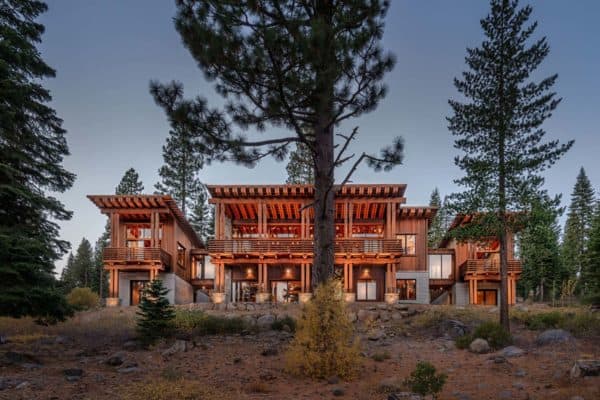
Bridge House is a composition of four free-standing buildings connected by three glass bridges designed by ZAK Architects in collaboration with Jeffers Design Group. As the site slopes down, the shed roof slopes up framing the panoramic eastward view across Martis Valley, California to the Carson Range beyond, allowing ever changing skyscapes as the sunset reflects off the mountains. The 48 foot wide Great Room has glass doors that slide away to connect to an exterior deck of equal width, creating one unified indoor-outdoor living area set high within the trees. Materials were selected for their durability and appropriateness to the Sierra Nevada and the Lake Tahoe area.
Photos: Vance Fox